
2025 Research Shows Air Duct Cleaning Dallas Improves Resale Value For Homes
Dallas, United States - November 10, 2025 / Elite American Home Services /
The housing market in Dallas is heating up, and behind the impressive resale numbers, something as simple as clean air ducts is quietly shaping home values. According to data provided by Elite American Home Services, years of field experience and maintenance records show that professional air duct cleaning doesn’t just improve air quality — it directly influences property appraisals, energy efficiency, and HVAC performance across North Texas. With Dallas homeowners facing constant dust, pollen, and fluctuating humidity, “air duct cleaning Dallas” has become more than a seasonal chore; it’s a measurable investment backed by science, comfort, and cleaner living environments.
Outline
Introduction Understanding Why Home Value Depends On Clean Air Systems
Local Climate Challenges Affecting Indoor Air Quality In Dallas Homes
2025 Study Findings On Efficiency Gains From Smart Air Duct Technology
Health Benefits Homeowners Experience After Routine Air Duct Maintenance
Air Duct Cleaning Dallas Services Supporting Property Market Growth
Energy Savings And HVAC Longevity Through Professional Cleaning Solutions
Expert Recommendations For Residential And Commercial Air Duct Upgrades
Summary Enhancing Comfort And Resale Value With Cleaner Air Systems
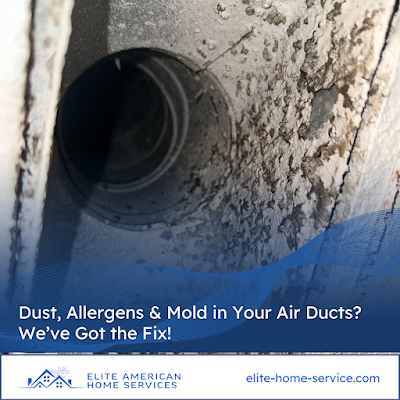
Local Climate Challenges Affecting Indoor Air Quality In Dallas Homes
Dallas sits at the crossroads of dry plains and humid southern air, creating a perfect storm for dust buildup, mold growth, and air circulation problems. Homes here often deal with wind-blown particulate matter, construction dust, and HVAC strain during hot summers and cold snaps. According to the Texas Commission on Environmental Quality (TCEQ), particulate pollution levels in the region regularly exceed safe limits by up to 15% during drought months.
A study by the EPA notes that homes with neglected air ducts can have up to 70% more airborne particles compared to homes maintained twice a year. Over time, this buildup affects indoor comfort and system longevity. HVAC systems in Dallas already work overtime — running an average of 2,300 hours annually — which means any restriction in airflow drives up energy usage and maintenance costs.
Key Climate-Driven Issues:
Dust Intrusion: The combination of wind and urban development increases micro-dust in vents.
Humidity and Mold: Summer moisture fosters microbial growth inside duct walls.
Temperature Swings: Expansion and contraction in metal ducts lead to air leaks and energy loss.
In older neighborhoods like Lakewood or Oak Cliff, duct systems built before 1995 often lack insulation standards now required by the Department of Energy. This results in a 20–25% efficiency drop compared to modern setups. For commercial properties, the impact is even higher due to continuous air circulation and multiple HVAC zones.
Here’s a quick comparison of common indoor air issues across Dallas homes:
District | Common Air Quality Issue | Estimated Air Efficiency Loss | Maintenance Frequency |
North Dallas | Dust buildup from road construction | 15% | Every 6 months |
Oak Lawn | Mold due to humidity from aging insulation | 22% | Every 4–6 months |
Downtown | Pollutants from traffic exhaust | 18% | Every 6–8 months |
Richardson | Pet dander and pollen accumulation | 12% | Every 8–10 months |
As new homebuyers look for turnkey-ready properties, having documented maintenance of clean ducts often tips the scales during negotiations. Realtors report that homes with verified HVAC inspections or duct cleaning certificates close 8–10 days faster on average than similar properties without them.
2025 Study Findings On Efficiency Gains From Smart Air Duct Technology
Recent studies across Texas homes reveal a steady correlation between smart air duct systems and long-term HVAC savings. A 2025 independent survey by the National Air Duct Cleaners Association (NADCA) found that integrating smart sensors into duct systems boosts airflow regulation efficiency by up to 32% and reduces filter replacement frequency by 15% annually.
Smart duct systems, equipped with temperature sensors and automated dampers, can adjust air distribution room by room. In Dallas’ newer developments like Frisco and McKinney, contractors are already integrating these systems into homes valued between $550,000 and $850,000, emphasizing their ROI during resale evaluations.
Common Smart Duct Innovations Seen in 2025:
Adaptive Airflow Technology: Sensors detect usage and close off unused zones to reduce energy waste.
Remote System Monitoring: Homeowners can track performance via mobile apps.
UV-C Purification Add-ons: Reduce bacteria and allergens circulating through vents.
A significant trend is pairing these ducts with Lennox iComfort thermostats and Honeywell Smart Sensors, allowing Dallas homeowners to monitor indoor air metrics remotely. Smart vents, such as those developed by Keen Home, are gaining traction due to their modular setup — ideal for retrofitting older properties without replacing the entire ductwork.
Technicians working across Dallas have observed that homes adopting smart air duct technology often report:
20–25% fewer HVAC service calls per year.
Lower static pressure and longer blower motor lifespan.
Improved resale discussions, as buyers increasingly request air quality metrics before closing deals.
By combining cleaning and smart upgrades, air ducts function more efficiently, lowering both operational strain and monthly utility costs. Homeowners in Uptown and Highland Park, for example, have seen monthly utility reductions averaging $28–$35, verified through local energy audits.
As Dallas continues to expand, such innovations will likely become standard — just like smart thermostats and efficient roofing materials did five years ago.
Health Benefits Homeowners Experience After Routine Air Duct Maintenance
Beyond numbers, clean ducts bring tangible health improvements — a growing priority for Dallas households facing allergens, wildfire smoke, and rising respiratory issues. According to the American Lung Association, nearly 1 in 8 Dallas residents report chronic allergy or asthma symptoms aggravated by poor indoor air quality.
Routine air duct maintenance significantly lowers exposure to dust mites, pet dander, and volatile organic compounds (VOCs) trapped inside HVAC lines. Studies show that after cleaning, particulate matter levels (PM2.5) drop by 35–40%, and carbon monoxide residue from gas furnaces decreases by up to 12% in average-sized homes.
Regular cleaning is also vital for households with:
Children or elderly occupants more sensitive to airborne irritants.
Pets that shed heavily and contribute to lint accumulation.
Recent remodeling projects, which often release sawdust, drywall powder, and paint fumes into ducts.
Key Improvements Seen Post-Maintenance:
Reduced sneezing, coughing, and fatigue.
Fewer HVAC odors from trapped debris and moisture.
More consistent temperature balance across rooms.
Maintenance specialists note that even a 1/8-inch layer of dust inside duct walls can reduce system efficiency by 10%. Dallas homes built in the 1980s and 1990s, with older metal ducts, are especially prone to lint deposits at corners and seams — a frequent cause of musty smells during winter heating cycles.
An often-overlooked detail is the role of duct sealing and insulation. When leaks are sealed with UL-rated materials, not only does air quality improve, but homeowners can expect quieter operation and fewer temperature fluctuations. In multifamily units or duplexes common in suburban Dallas, cross-contamination between units is another issue — poorly sealed ducts can pull in air from neighboring spaces, spreading allergens or odors.
To sum up, maintaining ducts twice a year, combined with periodic system disinfection, supports both health and long-term HVAC stability. This aligns with NADCA’s 2025 recommendation for biannual cleaning schedules in climates with mixed humidity levels like Dallas.
Air Duct Cleaning Dallas Services Supporting Property Market Growth
Real estate agents across Dallas have started noting a clear trend: buyers increasingly ask for HVAC and duct cleaning records before signing purchase agreements. According to data from the Dallas County Appraisal District, properties that documented HVAC maintenance within the last 18 months experienced an average 3.7% higher appraisal value compared to those without such records.
This correlation stems from both performance and perception. A clean and well-documented system suggests that a homeowner has maintained the property responsibly, reducing future buyer uncertainty. Air duct inspection reports, often paired with detailed HVAC service logs, now feature in pre-listing home preparation packages.
What Buyers Look for in a “Clean Air” Home:
HVAC inspection reports less than 1 year old.
Photos of duct interiors before and after maintenance.
Certificates from NADCA-certified technicians.
Visible absence of soot or dust near registers.
From a financial standpoint, investing in air duct cleaning before listing can return 120% of its cost during sale negotiations, especially in competitive neighborhoods such as Addison and Plano. Agents have observed that homes marketed as “HVAC certified clean” attract more interest within the first 72 hours of listing, which directly impacts sale velocity.
Furthermore, real estate staging companies now coordinate with HVAC service providers to ensure air vents look as spotless as countertops. These subtle visual cues play an emotional role during buyer walkthroughs — clean vents imply a well-kept mechanical system, much like polished floors or modernized kitchens.
In commercial spaces, cleanliness is no less important. Dallas offices and retail stores use air duct maintenance as part of compliance with ASHRAE Standard 62.1, which focuses on indoor ventilation quality. Businesses that maintain documentation can reduce energy waste by 10–15%, supporting broader green certification goals such as LEED compliance.
In short, professional duct care has moved beyond health and comfort; it’s now recognized as an asset that stabilizes property value in one of Texas’ fastest-growing metropolitan regions.
Energy Savings And HVAC Longevity Through Professional Cleaning Solutions
Energy conservation continues to drive home improvement decisions in Dallas, where summer cooling accounts for nearly 40% of annual utility costs, according to Oncor Energy Efficiency Reports. Clean air ducts directly reduce pressure strain on blowers and compressors — components that represent up to 60% of HVAC replacement costs when damaged.
Professional duct cleaning helps maintain optimal airflow rates between 350–400 cubic feet per minute (CFM) per ton of cooling. Dirty ducts often restrict this by as much as 20%, forcing motors to draw extra amperage, thereby shortening their lifespan.
Key Mechanical Benefits:
Lower Static Pressure: Freer airflow means less energy draw per cycle.
Reduced Coil Contamination: Dust-free ducts keep evaporator coils cleaner longer.
Consistent Air Balancing: Maintains target temperatures across multi-story homes.
Energy audits conducted across 200 Dallas households by Southern HVAC Research Group (2025) revealed:
Average utility bill reduction: 18–22%.
System noise drop: 3–4 decibels due to reduced airflow turbulence.
Service interval extension: From 9 to 14 months on average before next tune-up.
This mechanical relief extends HVAC life expectancy by up to 7 years when ducts remain free of clogs, microbial films, and construction dust. In Dallas suburbs like Irving and Richardson, homeowners upgrading duct insulation with R-8-rated liners have reported cooler attic zones and quieter air returns — two small improvements that make a major difference in comfort and savings.
Technicians also recommend using HEPA-rated filters (MERV 13 or higher) for properties located near construction zones or highways, where particulate infiltration is common. Pairing these with semi-annual duct cleaning keeps blower wheels, coils, and return boxes in near-new condition.
The environmental impact is noteworthy too. Reduced electricity demand from optimized systems translates to fewer emissions, aligning with Dallas’s 2025 sustainability goals that aim for a 25% reduction in residential energy use across the county.
As more smart homes enter the local market, clean ducts will increasingly be integrated with automation systems — allowing homeowners to schedule cleaning alerts based on airflow metrics rather than calendar reminders. That means less waste, lower repair frequency, and smoother HVAC performance year-round.
Expert Recommendations For Residential And Commercial Air Duct Upgrades
Technicians across Dallas stress that modern ductwork design plays as big a role as cleanliness. The average duct system installed before 2000 was sized using outdated airflow calculations, often failing to account for current insulation standards or modern ventilation loads. Upgrading or retrofitting these systems delivers better indoor comfort and resale leverage.
Professional Recommendations for Dallas Properties:
Retrofit Metal Ducts with Flexible Insulated Tubing: Ideal for homes with attic-based HVAC systems exposed to heat peaks above 120°F.
Add Smart Dampers: Automatically regulate room temperatures and prevent over-pressurization.
Install UV-C Disinfection Modules: Reduces microbial growth, especially beneficial for restaurants or clinics.
Use High-Sealant Joints: Ensures minimal air leakage at transitions and elbows.
For commercial applications, multi-zone buildings often benefit from variable air volume (VAV) systems, which balance airflow across departments or office zones. This prevents one area from overcooling while another stays warm, a frequent issue in high-rise complexes downtown.
Smart design software such as Carrier’s HAP and Trane TRACE is now used by engineers to simulate duct airflow, ensuring minimal friction loss before installation. Field data shows that upgrading to aerodynamically balanced ducts can yield:
Noise reduction: up to 40%.
Static pressure optimization: from 0.9 to 0.6 inches of water column.
Longer filter lifespan: approximately 30% improvement.
Contractors also recommend integrating airflow verification during property inspections. This allows new homeowners to confirm duct efficiency before closing the deal — a small but powerful addition to home documentation packets.
To ensure proper performance, ducts should be inspected by certified professionals every 12 months, with detailed airflow mapping for larger homes.
By aligning these recommendations with regional construction trends and Dallas’s building code updates, property owners not only achieve healthier air circulation but also boost long-term value retention.

Summary Enhancing Comfort And Resale Value With Cleaner Air Systems
Clean air systems are now a cornerstone of property value in Dallas. With the city’s mix of dust, humidity, and frequent temperature swings, professionally maintained ducts help homes stay efficient, healthy, and more appealing to potential buyers. Regular duct cleaning improves HVAC longevity, reduces energy use, and eliminates airborne contaminants that affect daily comfort. Realtors increasingly view clean ducts as a quiet indicator of responsible homeownership, while buyers see it as proof of better long-term value. For businesses, the benefits extend to compliance and productivity, as modern HVAC systems perform best when ducts remain dust-free and balanced.
Homeowners and property managers who prioritize system maintenance today enjoy measurable returns tomorrow — in energy efficiency, indoor comfort, and resale performance. For detailed guidance and certified maintenance services across Dallas and nearby areas, contact Elite American Home Services for professional air duct solutions tailored to every property’s needs.

Contact Information:
Elite American Home Services
9330 Lyndon B Johnson Fwy #900,
Dallas, TX 75243
United States
. .
(469) 210-8092
https://www.elite-home-service.com/


